
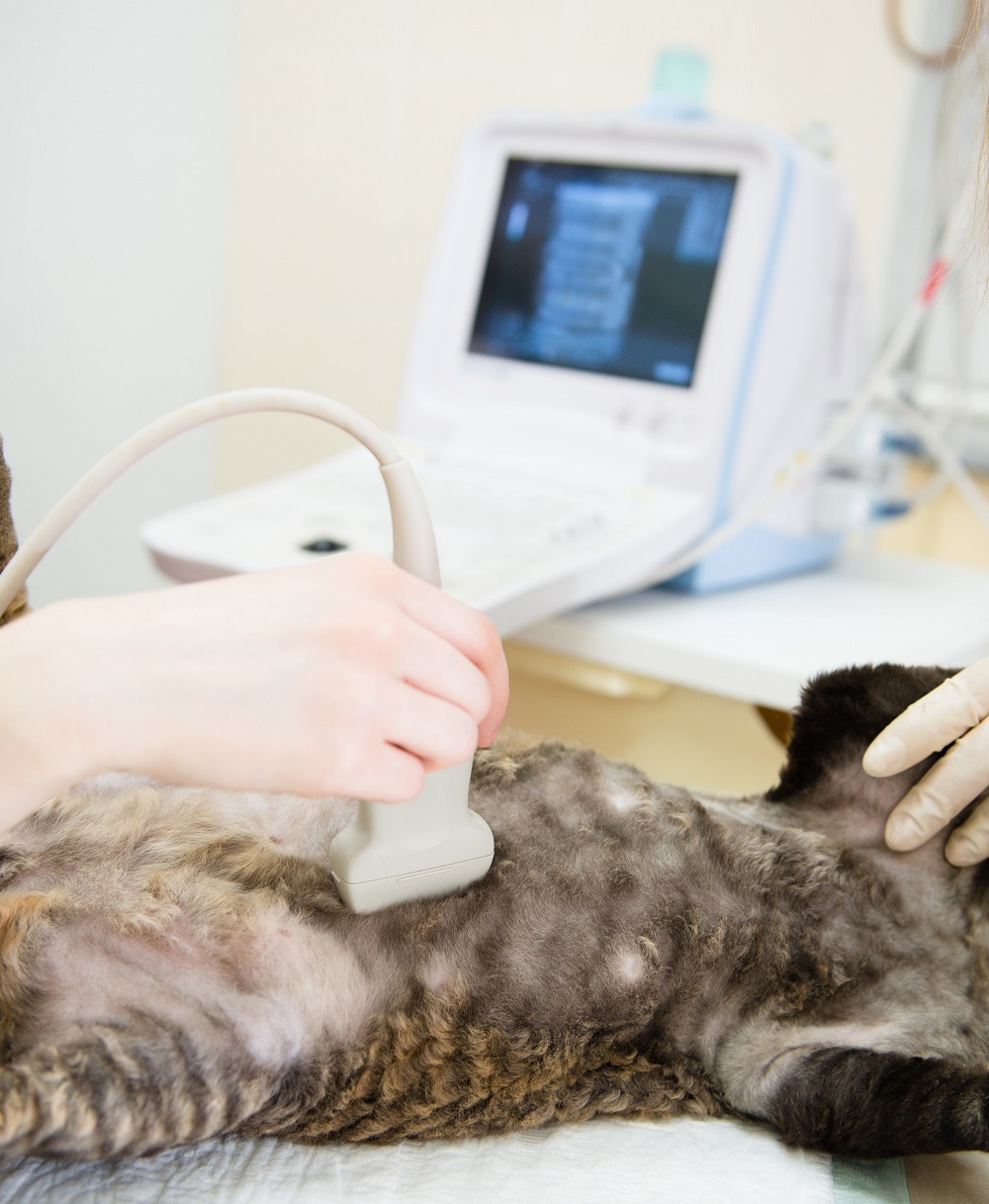
Veterinary Ultrasound Imaging in Dedham, MA
Ultrasound imaging is one of the most powerful diagnostic tools available in veterinary medicine — providing real-time, detailed views of your pet’s internal organs that X-rays alone cannot deliver. At Castlerock Veterinary Hospital in Dedham, MA, we use ultrasound to evaluate the abdomen, heart, and other soft tissue structures, giving our veterinarian the information needed to diagnose conditions accurately and quickly. Call (781) 329-5333 to schedule a diagnostic appointment for your pet.
How Veterinary Ultrasound Works
Ultrasound technology uses high-frequency sound waves that are directed into the body and reflected back to create real-time images of internal structures. Unlike digital X-rays, which are best suited for evaluating bones and detecting density differences, ultrasound excels at visualizing soft tissue — including the liver, spleen, kidneys, bladder, gallbladder, lymph nodes, adrenal glands, intestines, and reproductive organs. Ultrasound is also the gold standard for evaluating the heart’s structure and function through a procedure called echocardiography.
Ultrasound is completely non-invasive and does not use radiation, making it safe for use in pets of all ages, including pregnant females and very young animals. Most pets tolerate the procedure well; sedation is occasionally used for anxious pets or when a prolonged, detailed evaluation is required.
What Can Ultrasound Diagnose in Pets?
Abdominal organ evaluation: Ultrasound allows our veterinarian to assess the size, shape, texture, and blood flow of abdominal organs. Conditions such as liver disease, kidney disease, splenic masses, adrenal tumors, intestinal thickening, and gallbladder abnormalities can often be identified or further characterized with ultrasound.
Urinary tract conditions: Bladder stones and urinary tract irregularities that may not always be visible on X-rays can be clearly evaluated with ultrasound. This helps guide appropriate treatment planning for pets with recurrent urinary issues.
Abdominal fluid: Ultrasound is extremely sensitive for detecting free fluid in the abdomen — a finding that can signal internal bleeding, infection, or organ rupture. This is especially valuable in emergency situations where quick diagnosis is critical.
Pregnancy confirmation and monitoring: Ultrasound can confirm pregnancy, estimate litter size, and assess fetal viability — information that is valuable for breeders and owners managing a pregnancy.
Guided biopsy and aspirates: When a mass or abnormal structure is identified, ultrasound guidance can be used to precisely direct a needle for fine needle aspiration (FNA) or biopsy, improving diagnostic accuracy and minimizing risk.
Cardiac evaluation: Echocardiography (cardiac ultrasound) allows evaluation of heart chamber size, wall thickness, valve function, and overall cardiac output. This is particularly useful for pets with a heart murmur detected during a wellness exam.
Ultrasound as Part of a Complete Diagnostic Workup
Ultrasound is most powerful when used alongside other diagnostic tools. At Castlerock Veterinary Hospital, we integrate ultrasound findings with results from our in-house laboratory, digital radiographs, and physical examination findings to form a complete picture of your pet’s health. This comprehensive approach leads to more accurate diagnoses and more targeted treatment plans. If you’ve been told your pet needs an ultrasound, or if they are showing symptoms that warrant a deeper look, contact Castlerock Veterinary Hospital at (781) 329-5333 to schedule an evaluation.
Frequently Asked Questions — Veterinary Ultrasound
Is ultrasound safe for my pet?
Yes. Veterinary ultrasound is completely non-invasive and uses sound waves rather than radiation, making it safe for pets of all ages — including puppies, kittens, senior animals, and pregnant females. There are no known side effects from ultrasound imaging when used appropriately. Most pets tolerate the procedure calmly and without any sedation.
Does my pet need to be shaved for an ultrasound?
In most cases, yes. A small area of fur will be clipped over the region being examined to allow the ultrasound probe to make proper contact with the skin. This is a minor, temporary cosmetic change that grows back quickly. If the coat is very short, ultrasound gel alone may be sufficient in some cases.
How is ultrasound different from X-rays?
Digital X-rays are best for evaluating bones, the chest, and detecting changes in organ density. Ultrasound provides real-time, detailed images of soft tissue structures — including internal organ texture, blood flow, fluid accumulation, and masses — that X-rays cannot adequately capture. The two modalities complement each other and are often used together for the most comprehensive diagnostic picture.
Will my pet need sedation for an ultrasound?
Most pets do not require sedation for a routine abdominal ultrasound. The procedure is non-painful and relatively quick. However, for very anxious pets, or when a prolonged or highly detailed examination is needed, light sedation may be recommended to allow the veterinarian to obtain the most accurate images possible without causing stress to the pet.
What conditions might prompt my veterinarian to recommend an ultrasound?
Common reasons for ultrasound referral include: unexplained weight loss, vomiting or diarrhea that isn’t resolving, a mass detected during a physical exam, abnormal bloodwork findings involving the liver or kidneys, suspected abdominal fluid, urinary symptoms, or cardiac murmur evaluation. Ultrasound helps clarify what is happening internally when symptoms or test results suggest a deeper problem.
Can an ultrasound tell me if my pet has cancer?
Ultrasound can identify abnormal masses, enlarged lymph nodes, or irregular organ changes that may suggest cancer. However, a definitive cancer diagnosis typically requires a fine needle aspirate or biopsy of the tissue in question. Ultrasound guidance can be used to safely direct this sampling procedure, improving accuracy and reducing risk.
How do I schedule an ultrasound for my pet at Castlerock Veterinary Hospital?
Call (781) 329-5333 or request an appointment online. We’ll discuss your pet’s symptoms and history and determine whether ultrasound is the appropriate next step. We serve pet owners throughout Dedham, MA and the surrounding communities with advanced in-house diagnostic capabilities.